Reviewed · CAPPADOCIA
Pancake Making with a Local Woman
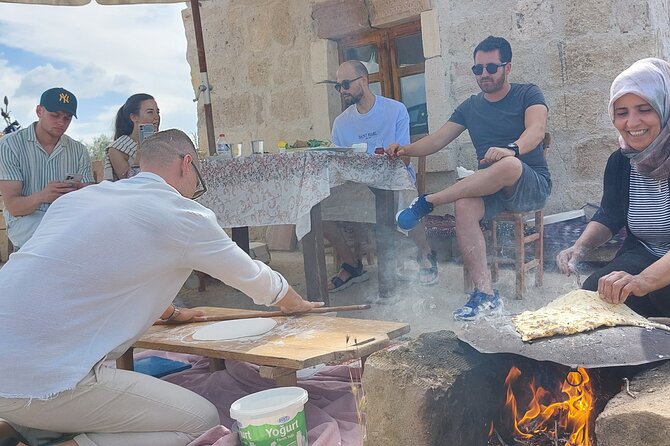
A hot flatbread class in Göreme is a simple joy. You’ll learn how to make pancakes tied to the same tradition that turns yufka into gözleme, taught by a local woman. Two things I especially like here are the hands-on part, where you cook too, and the relaxed add-on time in an open-air garden house. One consideration is that this experience depends on good weather, so plan for a possible change if conditions are rough.
This is a small-group activity, listed at a maximum of 10 travelers, which matters because cooking lessons go better when you can actually ask questions and move at your own pace. It also starts at 4:00 pm, a very workable time if you’ve been out exploring caves, viewpoints, or pottery workshops earlier in the day. With the listed duration of about 1 hour 45 minutes, it’s long enough to learn something useful and still early enough to keep your evening free.
In This Review
- Key things to know before you go
- What this 4:00 pm class is really about (and why that timing helps)
- Getting picked up and settling in
- The yufka tradition behind the pancakes and gözleme
- Your hands-on cooking steps, from dough to the hot pan
- What you’ll eat, and why it’s better than restaurant food
- The group size sweet spot, and how it affects the vibe
- Price and value: $25.80 for ingredients, vehicle, and a real skill
- Weather matters more than you think
- Who should book this cooking lesson
- Practical tips so you enjoy it, not just attend it
- Should you book Pancake Making with a Local Woman in Göreme?
- FAQ
- What time does the pancake making experience start?
- How long is the experience?
- Is pickup included?
- What’s included in the price?
- How many people are in the group?
- Does the experience run in any weather?
- What is the cancellation policy?
Key things to know before you go
- Small group size: Maximum of 10 travelers, so you’re not lost in the crowd
- Local instruction: A local woman teaches the method, from dough handling to cooking rhythm
- Garden house time: You get a calm, open-air setting while you learn and eat
- Wood-fired approach: The yufka tradition is described as being cooked on a wood-fired sheet metal
- What you actually eat: You’ll make and eat hot gözleme with common fillings like cheese, eggs, and spinach
Still building your Cappadocia itinerary?
- Cappadocia Hot Air Balloon Ride / Royal Balloon★ 5.0 · 6,829 reviews
- Cappadocia Hot Air Balloon Ride/ Turquaz Balloons★ 5.0 · 3,330 reviews
- Cappadocia Sunset ATV Tour★ 5.0 · 2,984 reviews
What this 4:00 pm class is really about (and why that timing helps)
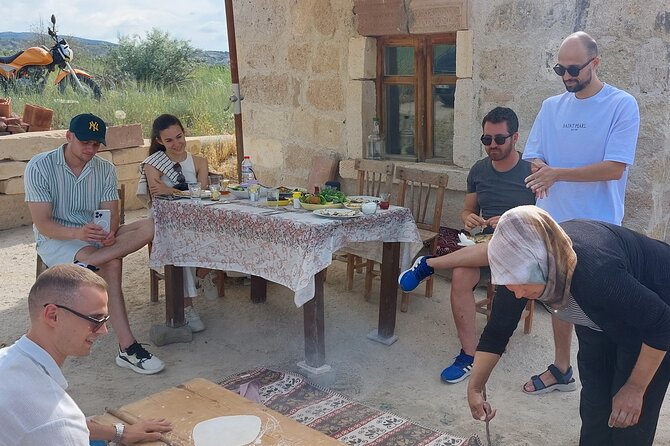
Cappadocia food can feel like a theme park if you only skim the menu. This class points you toward the everyday logic behind it. In the description, the focus starts with yufka, a traditional bread women have prepared for centuries, then connects that dough work to gözleme, the hot stuffed flatbread you eat right away.
The 4:00 pm start time helps in a practical way. You get daylight for whatever you do earlier, then you can shift into something indoor or semi-outdoor that doesn’t require you to be up at sunrise. It also lines up nicely with the idea that cooking lessons end with food that’s fresh and hot, not something you eat later after it has cooled down.
Getting picked up and settling in
You can expect an air-conditioned vehicle, and pickup is offered. That sounds small, but in Göreme it can make the difference between feeling rushed and actually arriving ready to focus. You’ll also have bottled water included, which matters during warm months when you’re moving around even lightly.
The learning space is the garden house setting, described as open air. That’s a big part of why I think this lesson is comfortable. Cooking is tactile, but having a calmer place to sit between steps keeps it from turning into a constant “stand and watch” experience.
The yufka tradition behind the pancakes and gözleme
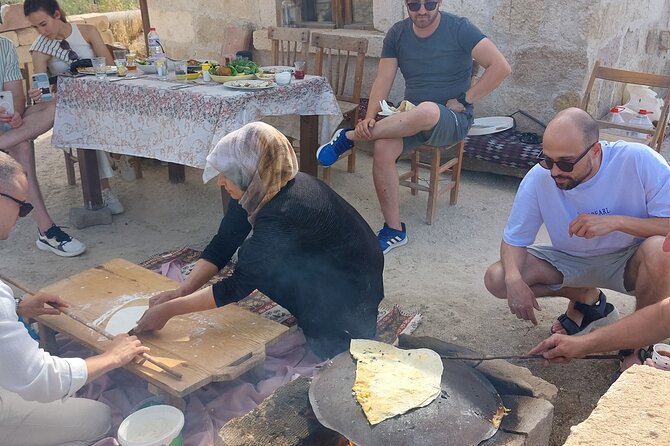
The heart of the class is the way local cooking grows from winter needs. The description explains that for centuries, women in Cappadocia made yufka before winter, cooking it on wood-fired sheet metal. That detail matters because it tells you the dough handling and cooking approach weren’t invented for tourists. They come from real household routines.
Then comes the link you’ll feel in your own hands as you cook: yufka doesn’t stay as plain bread. It gets transformed into gözleme by adding fillings like cheese, eggs, candied walnuts, potatoes, and spinach. The lesson is teaching you the logic of that transformation, not just the final product.
Why this is valuable for you: even if you never master yufka at home, you’ll understand how thin dough, a hot cooking surface, and a filling strategy work together. That understanding makes every similar Turkish flatbread you try later more enjoyable, because you’ll recognize the technique behind the flavor.
Balloons aren't the only reason to visit Goreme
- Cappadocia Sunrise Hot Air Balloon Flight / Discovery Balloons
★ 5.0 · 2,882 reviews - Cappadocia: Guided Red Tour with Lunch and Ticket
★ 4.9 · 2,452 reviews - Green (South) Tour Cappadocia (small group) with lunch and ticket
★ 5.0 · 2,317 reviews - Cappadocia: Guided Green Tour with Lunch and Tickets
★ 4.9 · 2,134 reviews
Your hands-on cooking steps, from dough to the hot pan
The experience is set up so you first learn with the help of the local woman, then you start cooking yourself. That pattern is ideal for beginners. You don’t have to guess when you’re working with dough, and you get immediate feedback as you try your turn.
The description also notes that the cooking happens on a wood-fired sheet metal style surface. That’s not trivia. A wood-fired setup tends to cook fast and hot, which changes how dough behaves. If your dough gets too thick, it can stay undercooked. If it’s rolled too thin, it can tear. When you learn, you’re learning those small, practical balance points that you can’t get from a restaurant plate.
A possible drawback to consider: because the cooking relies on a hot surface and good conditions, this isn’t the kind of class where you can treat it like a casual food tasting. You’ll want to be present and ready to participate for the whole session.
What you’ll eat, and why it’s better than restaurant food
You’ll have time to relax in the garden house while learning and then you’ll eat what you cook. The description specifically calls out that gözleme should be consumed hot. That tells you the meal is timed intentionally, so you’re not waiting around for an hour to start eating, and you’re not stuck eating lukewarm flatbread.
In other words, you get two advantages:
- You control the outcome, so the food feels earned.
- You eat at the right moment, while it’s still hot.
Fillings can include cheese, eggs, candied walnuts, potatoes, and spinach. Even if you don’t know exactly what you’ll be making during your turn, you’re in Cappadocia territory, and the variety is part of the fun. Candied walnuts in particular is the kind of ingredient that makes these regional flavors feel different from what you might expect elsewhere in Turkey.
The group size sweet spot, and how it affects the vibe
This class caps at 10 travelers. In a cooking setting, that keeps things human. You’re more likely to get help when you need it, and you’re less likely to feel like you’re being rushed through the steps.
One more thing that shows up in the overall tone of the experience: Turkish hospitality. The description and provided feedback point to a warm, generous approach, including for families. If you’re traveling with kids, a small-group cooking lesson can be easier than you expect, because the activity naturally breaks into visible steps.
That said, it’s still a cooking class. Children who get antsy during hands-on cooking, or who struggle with hot surfaces, may need extra attention. The good news is that the setup is described as calm and open-air, which typically makes it easier to keep the energy steady.
Price and value: $25.80 for ingredients, vehicle, and a real skill
At $25.80 per person, this isn’t a budget shocker, and it also isn’t priced like a big production. What makes it feel like good value is what’s included:
- Air-conditioned vehicle
- Materials for cooking
- Bottled water
Pickup is offered, which can also reduce the hassle cost in your day. And the experience is about learning a technique you can repeat, at least in parts, at home. Even if you never cook gözleme exactly the same way, you’ll leave understanding the process: thin bread, hot cooking surface, quick assembly, eat hot.
The only thing not included is tips. That’s normal for guided food experiences.
Weather matters more than you think
The experience explicitly requires good weather. If it’s canceled due to poor weather, you’ll be offered a different date or a full refund. That tells you the garden house and open-air portion are not just decorative. It’s part of the experience design.
So when you’re planning your day, build in slack. If your schedule is already tight and you hate uncertainty, keep that in mind. If you’re flexible, this is manageable and often worth the wait.
Who should book this cooking lesson
This is a great fit if you want more than a one-time taste. If you enjoy learning through doing, you’ll likely love the “watch first, then cook yourself” approach.
It’s also a nice choice if you’ve already done a lot of Cappadocia sightseeing and you want a slower, food-centered activity that still feels local. Göreme is tourist-heavy, but a cooking class that connects yufka to gözleme brings you closer to how people actually eat.
Finally, it’s well suited to small groups and families, based on the feedback tone you provided. If you’re traveling as a couple or with kids, the small size should keep it from feeling chaotic.
Practical tips so you enjoy it, not just attend it
I can’t tell you what your specific filling or dough steps will be, but you can set yourself up to get the most out of the time:
- Arrive a few minutes early so you start relaxed, not scrambling
- Be ready to handle dough and follow instructions closely, because the timing is part of the cooking
- Plan your evening so you’re not rushing right after. You’ll want time to enjoy what you made, while it’s hot
- Wear comfortable clothes you don’t mind getting a little messy, since dough work is the whole point
Should you book Pancake Making with a Local Woman in Göreme?
If you want a genuinely local-feeling food experience with hands-on cooking, this is an easy yes. The combination of learning yufka origins, cooking hot on a wood-fired style surface, and then eating the results in a calm open-air garden house makes it more than a quick bite.
Book it if:
- You like cooking classes where you participate, not just watch
- You want Cappadocia flavors connected to real household traditions
- You prefer small-group settings, max 10
Skip it if:
- You hate weather-dependent plans and need rigid timing
- You’re not in the mood to cook or handle dough at all
Overall, at $25.80, with materials, bottled water, and an air-conditioned ride included, it’s a fair deal for a skill-based, food-first afternoon in Göreme.
FAQ
What time does the pancake making experience start?
The start time is 4:00 pm.
How long is the experience?
It lasts about 1 hour 45 minutes.
Is pickup included?
Pickup is offered. The experience also includes an air-conditioned vehicle.
What’s included in the price?
Materials for cooking and bottled water are included, along with the air-conditioned vehicle.
How many people are in the group?
There is a maximum of 10 travelers.
Does the experience run in any weather?
It requires good weather. If it’s canceled due to poor weather, you’ll be offered a different date or a full refund.
What is the cancellation policy?
Free cancellation is available. You can cancel up to 24 hours in advance for a full refund. If you cancel less than 24 hours before the start time, the amount you paid is not refunded.