Cappadocia to Istanbul, with history packed in. This private Grand Tour links fairy chimneys, UNESCO sites, and Ottoman landmarks, with air-conditioned transport and professional guiding built into the day-to-day plan.
I love the value rhythm here. You get 10 nights in 4-5 hotels (B&B) plus lunch included across the trip, and most site entrances are handled for you so you spend less time managing details and more time seeing. I also like that the guide quality shows up in the real feedback, with names like Rosa and Fero appearing again and again, and the team keeping things organized and on schedule.
The one trade-off is pace. This is a big circuit, so several stops are short, and you will do a fair amount of walking and uneven terrain, which is why they call for a moderate fitness level.
In This Review
- Key highlights to look for in this Turkey tour
- Why this Grand Tour feels efficient for first-time Turkey planning
- Price and value: what $7,689.02 buys you
- Your Cappadocia day: from Göreme views to Uçhisar panoramas
- Göreme Panorama: the easiest win for first-time visitors
- Göreme National Park and the Open Air Museum: where the caves become churches
- Paşabağ (Monks Valley): the fairy chimney models people copy
- Avanos pottery workshop: hands-on tradition in a river town
- Pigeon Valley and Uçhisar Castle: quick stops, big payoff
- Day 2 in Cappadocia: Mustafapaşa charm plus underground Kaymaklı
- Mustafapaşa: Greek architecture in Cappadocia’s calm streets
- Sobesos Ancient City: Roman ruins with mosaic floors
- Keşlik Monastery and Soğanlı Valley: rock-cut churches and calmer walking
- Kaymaklı Underground City: how people adapted to the earth
- Beyond Cappadocia: caravanserai and Rumi in Konya
- Sultanhanı Caravanserai: a Silk Road stop you can still picture
- Mevlana Museum in Konya: Rumi’s legacy in turquoise tile
- Roman ruins by the Mediterranean: Perge, Side, and Aspendos
- Perge Ancient City: theaters, stadiums, and Roman baths
- Side Ancient City: seaside ruins with layers of cultures
- Aspendos Ancient Theater: acoustics you can feel
- Antalya and Kaş: coastal towns plus Myra’s Lycian tombs
- Antalya: old town Kaleiçi and Hadrian’s Gate
- Kaş: a seaside town that’s made for walking
- Myra Ancient City: rock-cut tombs on dramatic cliffs
- Termessos in the Taurus Mountains: ruins high above
- Hierapolis, Pamukkale, and Laodicea: spa city past plus mineral terraces
- Hierapolis: a Roman spa city with major structures
- Pamukkale thermal pools: the white terraces moment
- Laodicea: Byzantine and Roman bones in a major Phrygian city
- Ephesus plus Selçuk sites: Roman power, then spiritual pauses
- Ephesus Ancient City: the best-preserved Roman city in this region
- The House of the Virgin Mary: quiet reflection time
- Basilica of St. John and Temple of Artemis
- Pergamon and Bergama: steep theaters and the Red Basilica
- Pergamon acropolis and Asklepion: theater plus healing sanctuary
- Red Basilica (Kızıl Avlu): Roman to Byzantine to Revelation connection
- Istanbul day 10: Old City anchors and a Grand Bazaar wander
- Hagia Sophia, Blue Mosque, and Topkapı Palace
- Grand Bazaar: a maze that works best with a time limit
- Istanbul day 11: Dolmabahçe, Bosphorus views, and color in Fener and Balat
- Dolmabahçe Palace: Ottoman grandeur with European-style touches
- Bosphorus cruise: two continents worth of perspective
- Fener and Balat: Golden Horn neighborhoods for photos and quiet streets
- Day 12: end with an Istanbul Airport drop-off
- Who should book this Grand Tour of Turkey
- Should you book it?
- FAQ
- What language is the tour offered in?
- Is pickup included?
- Where does the tour start?
- How long is the tour?
- What kind of tickets do I get?
- Are hotels and breakfasts included?
- Are entrances included?
- What meals are included?
- How does the trip end?
- Can I cancel for a full refund?
Key highlights to look for in this Turkey tour
- Göreme Panorama timing for big views, with the chance to spot hot air balloons rising in the morning
- Göreme Open Air Museum in UNESCO territory, with rock-cut churches and frescoes
- Iconic Paşabağ (Monks Valley) fairy chimneys, a Cappadocia must for photos
- Underground city time at Kaymaklı, for a different side of ancient life
- Roman theater stop at Aspendos, often the kind of site you remember long after
- Istanbul Old City power trio, Hagia Sophia, Blue Mosque, and Topkapı plus a Grand Bazaar wander
Still building your Cappadocia itinerary?
- Cappadocia Red Tour,(included,lunch,guide,entrance fees)★ 5.0 · 199 reviews
- Affordable Hot Air Balloon Ride Over Cat Valley with Hotel Pick-up & Drop-Off★ 3.5 · 72 reviews
- Cappadocia Red Tour (All Included)★ 5.0 · 64 reviews
Why this Grand Tour feels efficient for first-time Turkey planning
This tour is built for people who want a lot of Turkey without constantly rebooking, rerouting, or losing half a day to logistics. You travel by air-conditioned vehicle and you have a professional guide working through the itinerary, so the history and the practical stuff land together instead of being separate tasks you have to juggle.
You also get a clear structure: Cappadocia first, then the Mediterranean and Aegean ruins, then Istanbul for the finish. That order matters. It keeps the trip from feeling random, and it makes it easier to connect themes as you go, like rock-cut life in Cappadocia, Roman urban life by the coast, and then Ottoman power in the capital.
Price and value: what $7,689.02 buys you
At $7,689.02 per person, this is not a budget tour. But it’s also not just a ticket to a bus ride.
What you’re paying for is the full package: 10 nights in 4-5 hotels (with breakfast, since it’s B&B), lunch included (11 lunches), a guided itinerary across many major sites, parking fees, and admission fees for the listed attractions. For a multi-region trip like this, those “small” costs add up fast if you try to assemble it yourself.
If you prefer to travel light and simplify decisions, that’s where the value really shows. You’re not spending time comparing tickets, negotiating museum entry lines, or figuring out transport between far-flung areas. You are paying for someone else to handle the stitching together.
Your Cappadocia day: from Göreme views to Uçhisar panoramas
Cappadocia days are the main event in this circuit, and the plan leans into the classic photography angles. Day 1 is a strong mix of viewpoints, rock-cut sites, and short-but-meaningful stops, with the biggest ticket items getting time to breathe.
Balloons aren't the only reason to visit Urgup
- Full Day Cappadocia Green Tour
★ 4.6 · 52 reviews - Top Sites of Cappadocia:Red Tour with Underground City Visit
★ 4.5 · 49 reviews - Cappadocia: Live Whirling Dervishes Ceremony & Sema Ritual
★ 4.5 · 37 reviews - Hot Air Magic in Cappadocia ( official company )
★ 4.5 · 37 reviews
Göreme Panorama: the easiest win for first-time visitors
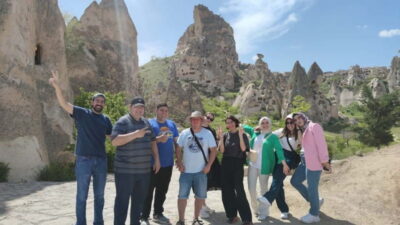
You start at Göreme Panorama, a viewpoint that’s known for sweeping views across fairy chimneys, cave homes, and valleys. With a morning visit, you can also catch hot air balloons rising in the sky, which adds that signature Cappadocia feel without needing you to plan a separate activity.
This stop is about 20 minutes, so treat it like a photo window and also a mental warm-up. Look around before you start snapping. Once you understand the terrain from here, the rest of Cappadocia makes more sense.
Göreme National Park and the Open Air Museum: where the caves become churches
Next is Göreme Open Air Museum in Göreme National Park, UNESCO territory and one of the main reasons people come to Cappadocia in the first place. You’re looking at rock-cut churches, monasteries, and frescoes dating back to the 10th century, and walking through the complex can feel like moving through a living history site.
You get about 2 hours. That’s enough time to slow down, read signage, and actually take in the painted surfaces. If your feet get tired easily, wear supportive shoes, because cave and stone surfaces are not always flat.
Paşabağ (Monks Valley): the fairy chimney models people copy
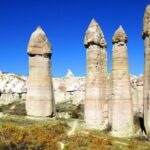
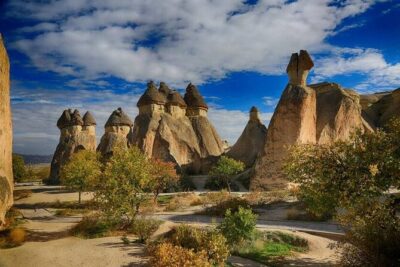
Paşabağ, also called Monks Valley, is one of the most iconic Cappadocia scenes. The fairy chimneys here have multiple rock caps, creating those dramatic shapes you see on postcards and pottery designs.
You get about 1 hour. I like this kind of stop because it gives you time for photos without turning into a long hike. It’s also a good place to learn the human story behind the stone shapes, since monks once used this landscape as a spiritual retreat.
Avanos pottery workshop: hands-on tradition in a river town
Avanos brings you into the craft side of Cappadocia. You visit a pottery workshop in Avanos, known for making ceramics from red clay linked to the Kızılırmak River. You can watch artisans shape clay on the potter’s wheel, and the experience includes real participation.
This is about 45 minutes, which is the sweet spot. You get enough time to understand the process, and you don’t end up with a half-day factory tour. Also, if you want one practical souvenir that doesn’t feel generic, this is where it makes sense to buy.
Pigeon Valley and Uçhisar Castle: quick stops, big payoff
Pigeon Valley is a short scenic stop (about 15 minutes) tied to ancient pigeon houses carved into the volcanic rock. It’s not long, but it’s useful because it shows you how people used these geological features for agriculture and daily survival.
Then you head to Uçhisar Castle Panorama, where you get a high viewpoint from the highest point in Cappadocia. It’s a 10-minute stop, but it can be one of the most rewarding views of the day because it gives you that 360-degree feel across valleys and fairy chimneys.
Day 2 in Cappadocia: Mustafapaşa charm plus underground Kaymaklı
Day 2 gives you a quieter, more varied side of Cappadocia. Instead of only focusing on the most famous view spots, it adds village streets, monastery rock-cut spaces, rural valley walking, and the underground city.
Mustafapaşa: Greek architecture in Cappadocia’s calm streets
Mustafapaşa, also known as Sinasos, is about a 30-minute exploration of a village known for well-preserved Greek architecture. You’re strolling through historic stone houses and quiet streets, which feels like the slow version of Cappadocia, compared with the big scenery viewpoints.
If you like small towns more than big monuments, this stop is a nice emotional reset.
Sobesos Ancient City: Roman ruins with mosaic floors
Sobesos is an ancient Roman settlement with ruins including mosaic floors and bath remnants. The time here is short, about 20 minutes, so you’ll want to focus on the key readable elements and take photos quickly before the group moves on.
This is a good stop for balance. After cave churches and fairy chimneys, you get Roman-era urban remains.
Keşlik Monastery and Soğanlı Valley: rock-cut churches and calmer walking
Keşlik Monastery is described as a hidden, peaceful stop with rock-cut churches and ancient frescoes. You get about 30 minutes, which can work well for photos and short exploration.
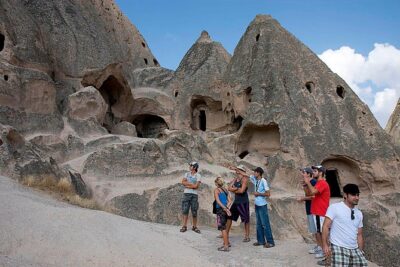
Then Soğanlı Valley is about 2 hours, with a mix of fairy chimneys and ancient rock-cut churches, and it’s positioned as a quieter area away from crowds. This is where you’ll feel the most “Cappadocia countryside” during the tour.
Kaymaklı Underground City: how people adapted to the earth
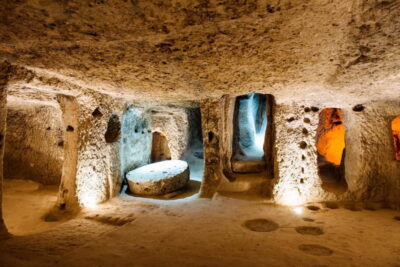
Kaymaklı Underground City is one of the largest underground cities in Cappadocia, with tunnels, rooms, and storage spaces carved into soft volcanic rock. You’re allotted about 1 hour, and the focus is on how communities lived and hid underground.
Because it’s underground, you might find it cooler than the surface, and you will likely move through passages that feel tight. Wear comfortable, stable footwear.
Beyond Cappadocia: caravanserai and Rumi in Konya
Day 3 shifts you from Cappadocia’s rock world to the travel and spiritual history of the Silk Road era and beyond.
Sultanhanı Caravanserai: a Silk Road stop you can still picture
Sultanhanı Caravanserai is one of Turkey’s largest and best-preserved caravanserais. You get about 30 minutes walking through grand stone halls and courtyards, imagining traders and travelers stopping here as routes connected East and West.
This stop is short, but it helps you understand the bigger system behind tourism. Turkey’s regions don’t feel separate when you see how trade, travel, and cultures moved.
Mevlana Museum in Konya: Rumi’s legacy in turquoise tile
Then you visit the Mevlana Museum, Rumi’s mausoleum, with the iconic turquoise-tiled dome. The tour includes a look at sacred artifacts and manuscripts, plus the story of Rumi’s philosophy tied to love and tolerance and the whirling dervishes.
You get about 1 hour. Even if you’re not deep into Sufi history, it’s still one of those places that gives you a human way to understand what people valued beyond politics and walls.
Roman ruins by the Mediterranean: Perge, Side, and Aspendos
Day 4 is where the trip becomes pure archaeology and architecture drama.
Perge Ancient City: theaters, stadiums, and Roman baths
Perge is a Roman city near Antalya with a grand theater, stadium, colonnaded streets, and well-preserved Roman baths. You get about 2 hours here, which is valuable because it’s enough time to move from one section to another and still notice details like street layouts and building purposes.
Side Ancient City: seaside ruins with layers of cultures
Side is coastal, and the ruins reflect Greek, Roman, and Byzantine heritage. You’re looking at the Temple of Apollo, the Roman theater, and ancient city walls, with the Mediterranean Sea as a backdrop.
Time here is about 1 hour. Short enough to keep momentum, long enough to understand the port-city vibe.
Aspendos Ancient Theater: acoustics you can feel
Aspendos is a highlight for many people because it’s one of the best-preserved Roman theaters in the world, built in the 2nd century AD. You have about 45 minutes here, and it’s described as still hosting performances today, which gives it a living quality.
If you like architecture more than just monuments, this is one of the best stops in the whole circuit.
Antalya and Kaş: coastal towns plus Myra’s Lycian tombs
Day 5 adds a lighter mood with Mediterranean towns, then returns to deep-time history.
Antalya: old town Kaleiçi and Hadrian’s Gate
Antalya is called the Turkish Riviera, and you get about 1 hour to explore Kaleiçi, with narrow streets, Ottoman houses, and the Roman harbor. You also see Hadrian’s Gate and some nearby ancient areas.
This is a “get your bearings” stop more than a deep dig. Still, it helps you connect the coastline to the ancient empire pages you’ll read later.
Kaş: a seaside town that’s made for walking
Kaş gets about 1 hour, with a laid-back vibe, crystal-clear water, and a harbor full of yachts and daily life. You can stroll cobbled streets lined with bougainvillea, visit cafés and boutiques, and learn about the Lycian rock tombs.
Also, Kaş is positioned as a jumping-off point for diving and boat trips, though those are not described as included here.
Myra Ancient City: rock-cut tombs on dramatic cliffs
Myra is where the focus turns back to archaeology. It’s known for impressive rock-cut tombs carved into cliffs and a grand Roman theater. You get about 2 hours, so it’s one of the longer history blocks of the day.
This stop is especially good if you like the Lycian style of funerary architecture rather than only Roman city grids.
Termessos in the Taurus Mountains: ruins high above
Day 6 is Termessos, perched high in the Taurus Mountains. It’s described as one of Turkey’s best-preserved ancient cities, with a theater, agora, temples, and necropolis.
Time here is about 3 hours. Because the site is remote and set in mountains, it’s the kind of day that feels different from city ruins. You’re combining history with big views, and it’s likely to feel more like an adventure than a museum circuit.
Hierapolis, Pamukkale, and Laodicea: spa city past plus mineral terraces
Day 7 hits two UNESCO-style sensations back to back: Roman spa city ruins and Pamukkale’s mineral terraces.
Hierapolis: a Roman spa city with major structures
Hierapolis Ancient City is about 1 hour, including a well-preserved theater, colonnaded streets, monumental gates, necropolis, and Roman baths. You’re also guided toward the travertine terraces of Pamukkale nearby.
Time is limited, so I’d treat Hierapolis as a big-picture stop. Get the layout and the main buildings first, then let the terraces be the emotional finale.
Pamukkale thermal pools: the white terraces moment
Then you go to Pamukkale itself for about 3 hours. You’ll walk along the white travertine terraces formed by mineral-rich thermal water cascading down the mountainside.
This stop is both natural wonder and ancient meaning. You’re seeing mineral deposits shaped by water patterns that have attracted visitors for thousands of years, all while the historic city ruins sit just above.
Laodicea: Byzantine and Roman bones in a major Phrygian city
Laodicea is about 1 hour, with colonnaded streets, theater, stadium, city walls, and reminders of its role as a commerce and early Christianity center. It’s a useful counterpoint to Pamukkale because it shifts from mineral scenery to city-scale ruins.
Ephesus plus Selçuk sites: Roman power, then spiritual pauses
Day 8 is an intense archaeology day anchored by Ephesus, then softened by quieter religious sites near Selçuk.
Ephesus Ancient City: the best-preserved Roman city in this region
You get about 2 hours at Ephesus, known for marble-paved streets and big civic buildings. You’ll see the Library of Celsus, grand theaters, ancient temples, and public baths.
This stop rewards you if you pause and look up at scale. Ephesus is not just walls, it’s how Roman life was organized.
The House of the Virgin Mary: quiet reflection time
Next is the House of the Virgin Mary, believed by many to be Mary’s final residence. You get about 1 hour to walk through the stone house and gardens, and the setting is described as peaceful.
Even if you are not religious, you’ll likely find this a welcome break from the intensity of ruins.
Basilica of St. John and Temple of Artemis
Then you visit Basilica of St. John in Selçuk, about 30 minutes, a 6th-century Byzantine basilica believed to be the burial site of St. John the Apostle. You also see the Temple of Artemis for about 20 minutes, with remains of one of the Seven Wonders of the Ancient World.
These short stops keep the day from running too long. But it’s also why your mindset matters. Go in ready to appreciate fragments and the story behind what is gone.
Pergamon and Bergama: steep theaters and the Red Basilica
Day 9 takes you to Pergamon, one of the Hellenistic centers tied to learning and major cultural life.
Pergamon acropolis and Asklepion: theater plus healing sanctuary
Pergamon Ancient City is about 2 hours, including the acropolis, ancient theater, temples, and the Asklepion healing center. The Asklepion visit is about 1 hour, focusing on Asclepius and treatment areas within the sanctuary.
If you like how ancient people mixed religion, healing, and architecture, this is a strong pairing. It’s also a nice way to balance earlier Roman stops with Greek-centered ideas of medicine.
Red Basilica (Kızıl Avlu): Roman to Byzantine to Revelation connection
Then comes the Red Basilica, a red-brick Roman temple turned into a Byzantine church. It’s about 30 minutes, and it’s connected to the Seven Churches of Asia mentioned in the Book of Revelation.
Even as a short stop, it’s visually dramatic because of the scale and the layered use of the same structure across centuries.
Istanbul day 10: Old City anchors and a Grand Bazaar wander
By Day 10, you’re in Istanbul and moving through the historic peninsula highlights. The plan here is built like a greatest-hits walk, with major landmarks spaced through the day.
Hagia Sophia, Blue Mosque, and Topkapı Palace
You start with the Hippodrome area for about 30 minutes, then you visit Hagia Sophia Grand Mosque for about 1 hour. Next is the Blue Mosque for about 30 minutes, then Topkapı Palace for about 1 hour.
These stops are the kind that sell Istanbul to people instantly. You’ll see UNESCO-level architecture and Ottoman-era artistry, including the Blue Mosque interior decorated with over 20,000 İznik tiles.
Grand Bazaar: a maze that works best with a time limit
You end with the Grand Bazaar for about 45 minutes. It’s described as one of the oldest and largest covered markets, with over 4,000 shops.
If you’ve never done a big bazaar before, this time limit helps. You can wander, see how it functions, and shop lightly without getting lost for hours.
Istanbul day 11: Dolmabahçe, Bosphorus views, and color in Fener and Balat
Day 11 expands Istanbul beyond the main monuments.
Dolmabahçe Palace: Ottoman grandeur with European-style touches
Dolmabahçe Palace is about 1 hour. You’ll see crystal chandeliers, gold details, and elegant European-style architecture, plus the palace’s role as the residence for the last Ottoman sultans and Atatürk.
Bosphorus cruise: two continents worth of perspective
Then you take a Bosphorus cruise for about 2 hours. The point is the view line. You’ll sail between two continents and see Ottoman palaces, fortresses, mosques, and waterfront mansions.
Even if you already know Istanbul, this cruise changes the experience. It turns the city into a moving panorama.
Fener and Balat: Golden Horn neighborhoods for photos and quiet streets
Finally, you explore Fener and Balat for about 1 hour. You’ll find Greek Orthodox heritage in Fener and narrow streets with colorful houses, art cafés, and antique shops in Balat.
This is a good final neighborhood stop because it gives Istanbul a human scale after all the monumental stops.
Day 12: end with an Istanbul Airport drop-off
The tour ends with a transfer to Istanbul Airport. This matters because after 12 days, the worst ending is an unexpected scramble.
With the planned drop-off, you can pack, collect your energy, and head to the airport without guessing transportation.
Who should book this Grand Tour of Turkey
Book it if you want a private, organized way to see a lot of Turkey’s top sights across multiple regions. It’s a great fit for first-timers who care about history, architecture, and iconic scenery, and who appreciate having a guide handle pacing and site selection.
It’s also a good choice if you prefer comfort. You have air-conditioned vehicle, hotel stays in the 4-5 range, and lunch included, so you’re not living on snacks for 12 days.
I’d think twice if you hate a fast pace. This itinerary includes many stops, some of them timed tightly. You’ll want patience in crowded, high-demand areas, and you should be ready for walking at ruins and uneven stone surfaces. It also helps if your travel style includes group timing, since the plan is structured.
Should you book it?
Yes, if you want Turkey in one organized, high-impact sweep, with guiding and key admissions handled. The standout strengths are the combination of Cappadocia viewpoints and rock-cut sites, major archaeology stops like Aspendos and Ephesus, and an Istanbul finale that hits the biggest landmarks plus a Bosphorus cruise.
If you’re the type who wants long free afternoons in each city, or you get stressed by fast transitions, this might feel like too much. But if your goal is to see the major regions and understand them in context, this tour is built for that exact job.
FAQ
What language is the tour offered in?
The tour is offered in English.
Is pickup included?
Pickup is offered. The operator contacts you via WhatsApp or email to share the exact pickup location.
Where does the tour start?
It starts at Cumhuriyet, Atatürk Blv. No:35, 50400 Ürgüp/Nevşehir, Türkiye.
How long is the tour?
It’s approximately 12 days.
What kind of tickets do I get?
You receive a mobile ticket.
Are hotels and breakfasts included?
Yes. The package includes 10 nights and 9 days of B&B accommodation in 4-5 hotels.
Are entrances included?
Yes, entrance fees are included for the sites listed in the tour.
What meals are included?
Lunch is included for 11 lunches. Breakfast is included through the B&B hotel plan.
How does the trip end?
At the end, you are dropped off at Istanbul Airport.
Can I cancel for a full refund?
Yes, free cancellation is available if you cancel up to 24 hours in advance for a full refund.
Newest bookings in Urgup


Tours, compared.
Full Day Cappadocia Red and Green Combined Day Tour
Read our review →
Green (South) Tour Cappadocia (small group) with lunch and ticket
Read our review →
Red (North) Tour Cappadocia (small group) with lunch and tickets
Read our review →